
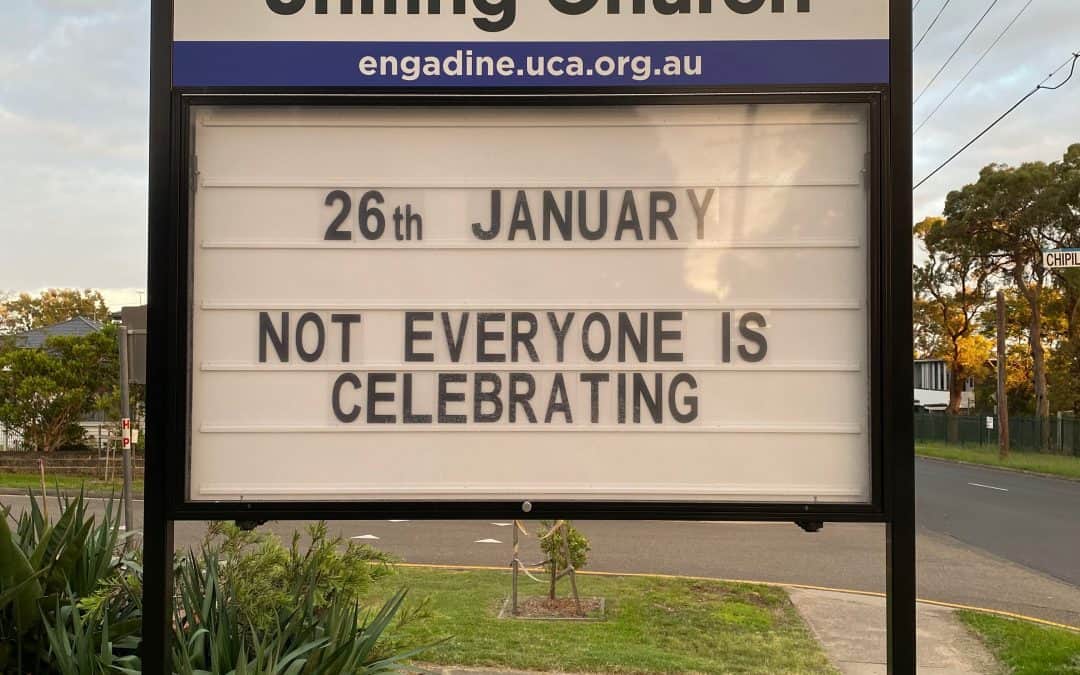
We could quite reasonably propose changing the date, and then get into arguments about ‘which date?’ that are fraught with historical difficulties or fiction and plagued by a plethora of alternatives, but decided instead to state the simple fact that not everyone celebrates this day. That’s it – nothing else. Not everyone is celebrating. The reader might react in a number of ways (surprise, curiosity, affront, reflection) but it is a fact we are publishing, not an opinion.
Of course, this fact is not a new one – significant protests were staged by Aboriginal people in 1938 as White Australia marked its sesquicentenary, and were supported at the time in various ways by both trade unions and churches – but it is still news to people in many parts of Australia. Increasingly, it is not just Indigenous people who refuse to celebrate 26th January but ordinary Australian businesses who offer their staff the opportunity to work on that day in exchange for nominating a different day to take their gazetted public holiday.
In our Engadine congregation, we respond to the 2018 request of the Uniting Aboriginal and Islander Christian Congress to observe a Day of Mourning on the Sunday before the 26th January. In common with many other Uniting Church congregations, we hold a worship service to reflect upon and lament the effect of the invasion and colonisation on First Peoples and our identity as a nation. Former president of the Uniting Church writes here about the why the church supports this practice (2min read)
We continue to work on our Walking Together plan and encourage everyone to read this important piece in the Canberra Times, penned by Nathan Tyson, manager of the First Peoples strategy and engagement with the Uniting Church (NSW & ACT).
Recent Comments