
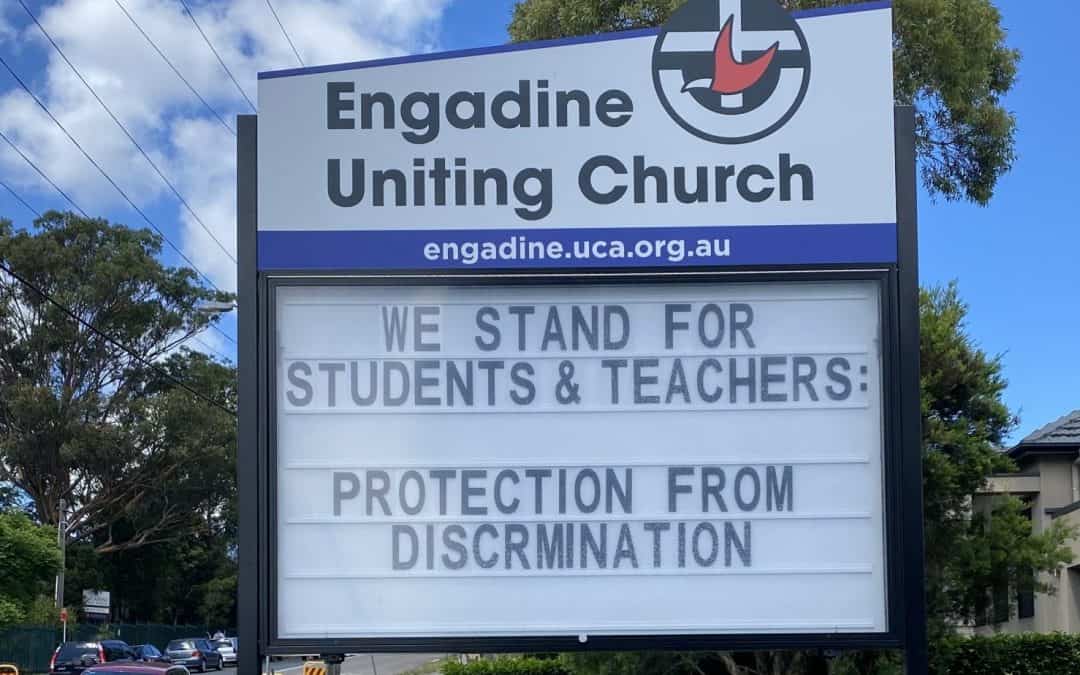
Let’s be clear right from the start: the religious discrimination bill has never been about plugging a gap but about getting even. Losing the fight on marriage equality in 2017 enraged some MPs and supporters of the Coalition, but the 2018 bill didn’t work out as quickly and neatly as they hoped due to internal dissent. As the federal election drew near through all of 2021, the bill has been utilised as a tool to neatly wedge the Opposition. So just to be clear: it’s a political tool to address a political problem, not a piece of legislation brought in good faith to solve an existing social problem.
The Uniting Church has made submissions to the bill and appeared before both Inquiries, resisting the idea that church members are subject to discrimination on religious grounds and expressing concerns for the safety and wellbeing of the LGBTIQ community, people with disabilities, women, and minority faith communities, asserting that the Bill fails to strike the correct balance between people’s rights, protections and responsibilities. You can read the most recent statement from the President of the Uniting Church on the Assembly’s website here (2min read). Rev Dr Eleni Poulos writes thoughtfully about the issues in the November issue of Insights Magazine here, explaining that the bill will cause damage to Australian society that will be difficult to heal (4min read).
Using our prime corner location to provide visible support in the community at this critical time is one way our congregation can step up and speak out. Bearing in mind that many primary school students and their carers walk or past our sign every day as they cross the road to the school, we chose a message that allows parents to talk about the issue at a level suitable for their own children. Religion is no excuse for discrimination.
PS. Do read this heartrending speech by Stephen Jones, MP for Whitlam in NSW, as he speaks about his nephew and implores the government to do more to protect LGBTQ+ youth for whom “love and acceptance of family and friends weren’t enough”.

Recent Comments